
Structural Geology for Exploration and Mine Geologists
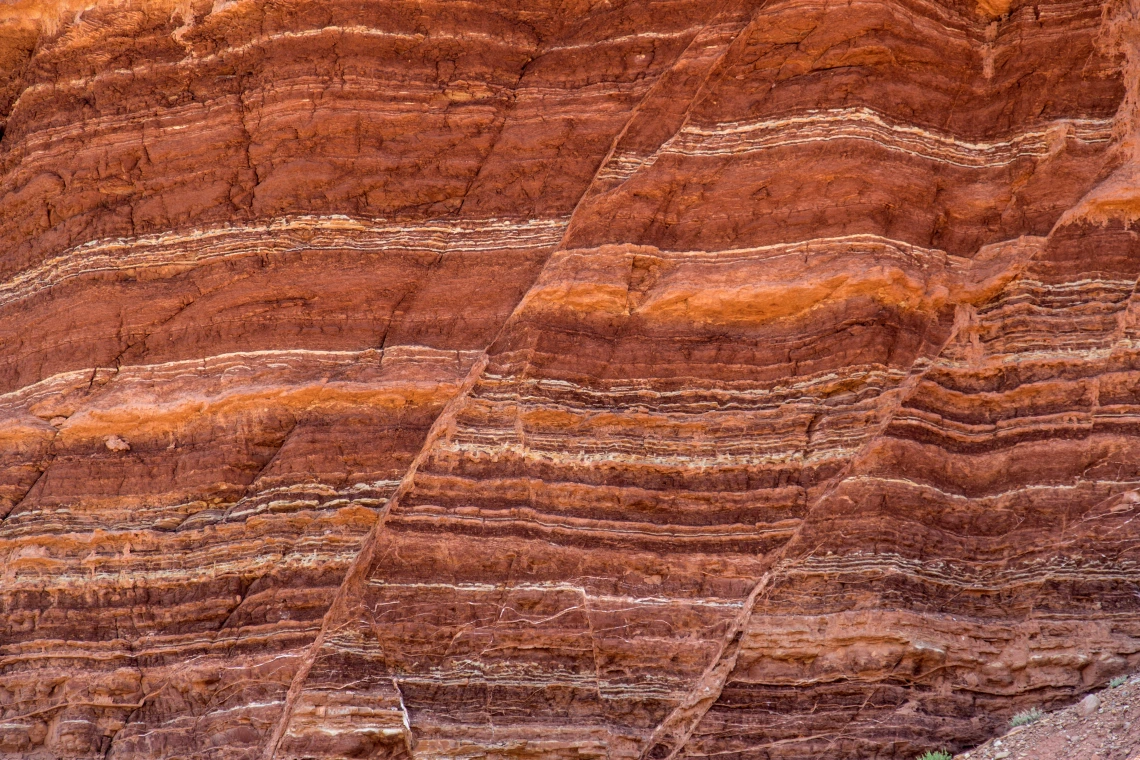
This intensive course deals with the application of structural geology to mining and exploration geology. Diverse structural systems and deformation styles influence the formation, preservation, and dispersal of mineral deposits. They are examined in the context of local (e.g., veins, breccias, faults, slope stability), regional structural (e.g., fault systems), and tectonic evolution (e.g., origins of mineral trends/belts).
This course will be offered in early 2027.
Course details
Structural geology is essential to the sound practice of mineral production, development, and exploration, and it has played a central role in the discovery of deposits such as Kalamazoo and Ann-Mason. The course is designed as an immersive, intensive ten-day experience, with the intended customers/target audience being the global, early- to late-career professionals who want to improve their skills in structural geology. The course is designed to accommodate participants with a wide range of experience, from those having little experience (e.g., an undergraduate degree in geology plus one year of industry experience or one year of graduate education) to those who are, or aspire to be, specialists in the structural geology of mineral deposits. The instructors are current and former industry, academic, and government geologists with expertise in structural geology, mineral deposits, or both, including structural geology specialists from industry, who will offer personal interaction with participants.
The course format includes lectures and laboratories/desktop exercises, plus three days of field trips with exercises. The schedule begins with two days on the fundamentals of structure and the course's themes, preparing all participants for the heart of the program. Then, two days will be devoted to crustal shortening (fold-and-thrust belts and basement-cored uplifts) and applications to mineral deposits, including a one-day field trip. We will cover crustal extension and applications in about three days, including one day in the field examining brittle normal faults and another day in a local metamorphic core complex. Strike-slip faulting and applications are covered in one-half day. Two-thirds of a day will address structures in specialized settings, such as volcanic and plutonic environments, and the structural tools used to interpret them. We dedicate more than one day to synthesizing structures in key mineral deposit types and exploration targeting strategies.
UA Students, please find more information about this course in the course catalog: GEOS 504G.
Venue
The lecture sessions and in-class activities are held at the Marriott University Park Hotel on the edge of the University of Arizona campus.
Fees
The fee for the short course is US$3,700 (before the early registration deadline). After that, the course fee increases to US$3,900. Organizations receive a 15% group discount for four or more registrants.
What your registration fee payment entitles you to:
- Short course handbook, materials for in-class activities, and field trip guides
- Two coffee breaks per day (coffee, tea, pastries) during lecture sessions
- Group lunch and dinners (one buffet lunch and one dinner for the keynote speakers, and another on the final evening in Tucson)
- Lunches (boxed sandwich meals) for field days
- All transportation during field trips
What you pay for:
- Hotel for all nights
- Meals (except for the three group meals and three box lunches)
- Airfare or other form of transportation to and from Tucson
We work with Marriott to secure a discounted rate for short-course participants. Most participants enjoy staying at the Marriott for its accommodations and the convenience of the short course.
Information for non-US residents
Non-US residents or citizens who want to participate in the short course must have a US visa or check whether they are eligible for an ESTA. If you have to apply for a U.S. visa to enter the U.S, we work with you to ensure you have the necessary documents for your application. Please note that we do not initiate visa applications.
During the course, you will be asked to sign a “Statement of Honoraria Recipients” (used in association with expenses associated with the activities of foreign visitors who come to the US on visa types B1/B2 and WB/WT). We will also make a photocopy of your passport page showing the photograph and expiration date, and the passport page showing the visa, or alternatively, Mexican Border Crossing Card (Nationals of countries that participate in the “US visa waiver program” do not need a visa to enter the US).